
Philanthropy Strategy 2025-2031
Realdania’s Philanthropy Strategy 2025-2031 aims to enhance quality of life through the build environment.
The Strategy underlines Realdania’s role as a philanthropic association that creates long-term results through partnerships rooted in Denmark’s long philanthropic traditions, with the public and private sectors and civil society supporting each other for the common good.
While already a recognised force in the construction industry as well as among its members and the public, Realdania is committed to sharpening its profile to maintain legitimacy and a positive reputation, which is essential for Realdania to act as a trusted philanthropic fund.
With the Philanthropy Strategy 2025-2031, Realdania wishes to ensure a significant impact through the funds allocated to its philanthropic activities. Together with a wide range of partners, we will contribute to changing and developing the built environment.
Through the strategy, we will:
- Ensure that Realdania visibly engages in agendas where the built environment can truly enhance the quality of life
- Strengthen the role of Realdania as a trusted philanthropic actor in the built environment
- Ensure that Realdania is present, visible and relevant as a philanthropic association for everyone in Denmark
- Utilise cutting-edge philanthropic tools to support Realdania’s mission of enriching lives through the spaces we inhabit
The Strategy defines three agendas where Realdania intends to prioritise its philanthropic efforts. These agendas address global, national and local challenges in which the built environment plays a significant role.
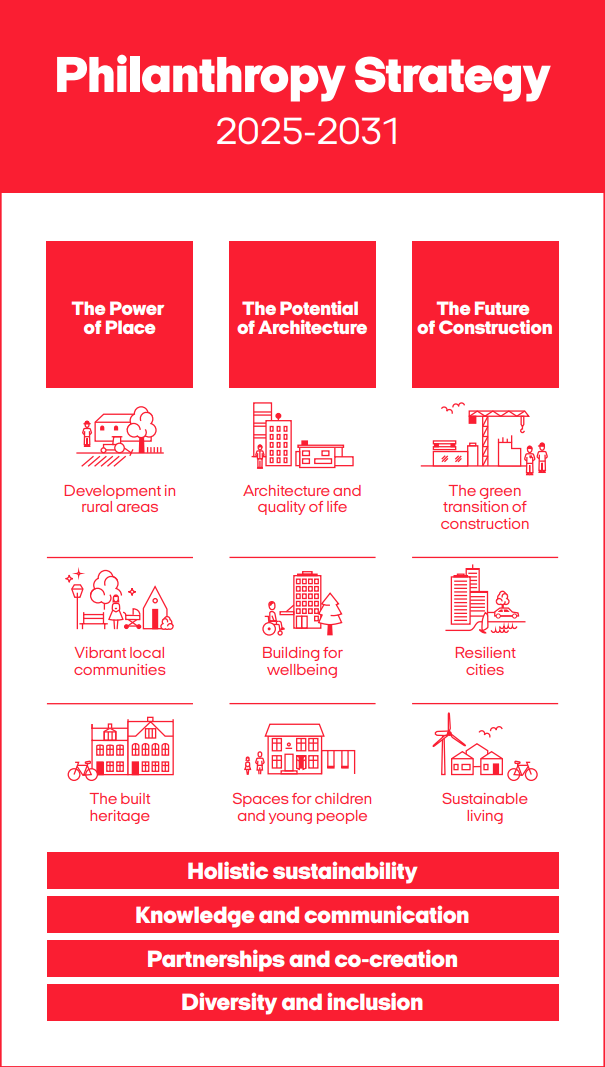
Under these agendas, more detailed focus areas have been identified to indicate to potential applicants, partners, the construction industry and the public where Realdania intends to focus its efforts during the current strategy period. The agendas themselves are expected to remain fixed throughout the strategy period, while there may be a need to adjust or add focus areas.
The strategy secures a framework which will allow both for major philanthropic efforts to be initiated that address a societal issue and in which the built environment plays a role, and for funding to be applied for by other projects large and small that lie within the defined focus areas and accord with the philanthropic agendas. Common to all of the projects is that they must contribute to Realdania’s overall mission to enhance the quality of life through the built environment.
Realdania takes a balanced approach to the philanthropic tools, utilising both classical, strategic and catalytic philanthropy to achieve the greatest possible effect. With this strategy, Realdania wishes to be able to bring more philanthropic tools into play in the same initiative, including ownership and mission-related investments, to obtain better philanthropic results and impact.
Philanthropic agendas
The selected agendas are characterised by addressing major societal challenges. The solution will require a long-term strategic aim, broad collaborations and multiple instruments, while building upon Realdania’s position of strength within the built environment.
The focus areas reflect activities and efforts aimed at addressing the underlying issues in the agenda. These focus areas will be shaped in close dialogue with stakeholders across the field, reflecting our commitment to co-creation and partnerships.
The three agendas and the underlying focus areas that express Realdania’s philanthropic ambitions are listed here and elaborated upon below:
Agenda: The Power of Place
- Development in rural areas
- Vibrant local communities
- The built heritage
Agenda: The Potential of Architecture
- Architecture and quality of life
- Building for wellbeing
- Spaces for children and young people
Agenda: The Future of Construction
- The green transition of construction
- Resilient cities
- Sustainable living
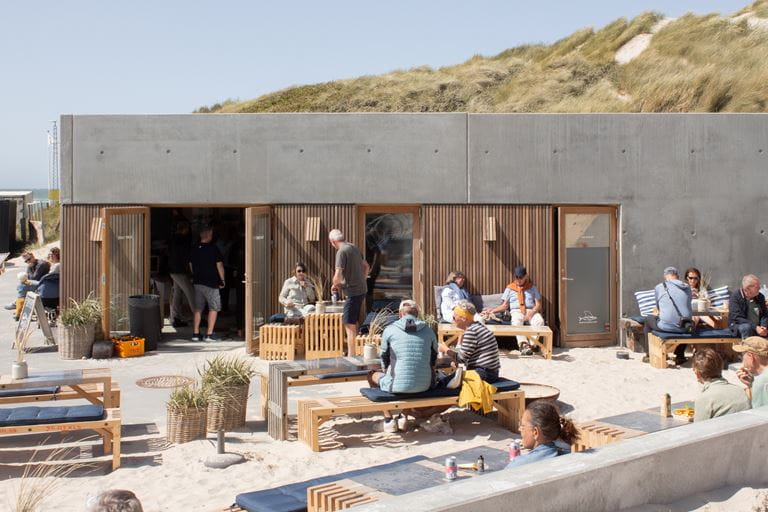
Although Denmark enjoys a high degree of social cohesion and quality of life compared to other countries, significant disparities remain between the wishes, opportunities and needs of people in the cities, the suburbs and the countryside. We now live our lives in a more isolated manner, loneliness is permeating through population groups, and there are local concentrations of social problems in both rural and urban areas. No matter where we live, it is essential to our wellbeing that we experience a sense of belonging and connection with others.
Denmark is made up of communities that are shaped by their landscapes, buildings and cultural heritage. The country possesses a strong civil society, active entrepreneurs and a rich cultural life, while our building heritage and urban areas contribute to our sense of identity and belonging. There is thus considerable potential in developing local cultural activities, supporting local businesses, strengthening local associations, meeting places and urban spaces, and developing both urban and residential areas with an understanding of the history, culture and life lived in the location.
Focus area: Development in rural areas
Rural areas continue to face major changes, and there are significant geographical differences. In some areas there is activity and growth, while others are experiencing ageing and declining populations. This makes it difficult to keep local schools, associations and shops going, while in the most challenged local communities there are concentrations of social problems. At the same time land use is changing rapidly, and more functions must now be accommodated by the open countryside. This requires the development of new rural solutions, so that the high quality of life, local capacity for action and strong communities that exist in many rural localities can be preserved for the future.
The rural districts have unique qualities, and Realdania’s experience is that both stand-alone projects and broad, long-term partnerships based on the potential of the locations are capable of creating positive change.
Realdania will focus on:
- Contributing to exemplary building projects to strengthen rural areas and promote local quality of life
- Supporting broad regional and local partnerships to secure long-term development and transformation in the countryside by employing many different instruments in the same location, including town planning, construction, renovation and transformation
Focus area: Vibrant local communities
The built environment plays a crucial role in the development of vibrant and active communities whether in the city, the suburbs or the countryside. The build environment creates opportunities for people to meet, take part in activities, engage in common interests and connect with their local area. However, not everyone is part of the community. Loneliness is a growing challenge, and a lack of human relationships can negatively impact our quality of life.
There is thus a need to support local associations and voluntary groups across the whole country by providing physical settings for meetings and activities, as well as by focusing on new ways of living that cater to different needs and population groups, while supporting growth in the housing market and opportunities to create and maintain good neighbourly relations in the locality.
Realdania will focus on:
- Contributing to exemplary building projects that enhance and transform both new and existing urban and residential areas on the basis of local conditions
- Supporting local actors and activists with physical meeting places and projects that promote local communities and human relationships in everyday life
- Contributing to exemplary building projects that promote the development of new housing typologies, including the transformation of existing properties that enhance everyday life and communities, with neighbourhoods that support different needs and living requirements
- Promoting analytical and developmental work that investigates and reveals the housing needs of the future and the development of new housing typologies.
Focus area: The Built Heritage
There is great potential for new functions and communities in old buildings round about in Denmark, but the architectural heritage and cultural environments are also vulnerable and in danger of vanishing. When such buildings disappear, we all lose part of our common history and identity.
If historic buildings and cultural environments are to remain a positive setting for our lives, they must possess content that is relevant to everyday life here and now, and they must also live up to modern demands in relation to function, comfort and sustainability. It is thus vital that we possess knowledge about how to restore and maintain our building heritage.
Surveys reveal that many people are interested in learning about the building culture of their local area, but there is a need to engage even more people in preserving and developing historic buildings and urban environments so that they can continue to delight future generations.
Realdania will focus on:
- Contributing to exemplary building projects in the conservation, development and transformation of buildings and cultural environments of regional and national importance
- Ensuring the preservation of the very important buildings, especially through active ownership
- Encouraging more people to help bring new life to existing buildings
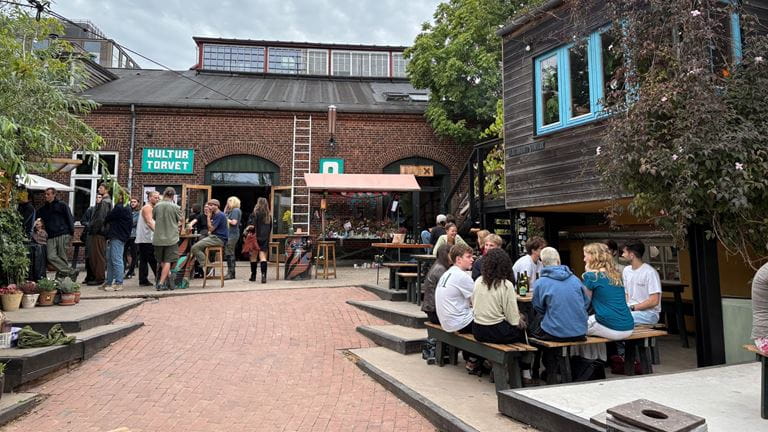
We are facing an uncertain future in which climate change, changing demographics and political crises will have a major impact on our society. In a time of rapid technological development, some groups are experiencing a decline in their physical and psychological wellbeing.
Historically, crises and technological advances have left their clear mark on the way we build and organise our society, and architecture has often provided visions for the future as well as solutions to contemporary challenges.
Architecture can both help to solve large-scale tasks in society and support quality of life in our immediate surroundings and everyday lives. Architecture plays a central role in our sensory experiences, social interactions and health but we do not always have an eye for the possibilities that architecture offers us, or for how it affects us.
Focus area: Architecture and Quality of Life
Architecture shapes the surroundings we live in as human beings. Consequently, architecture has the potential to contribute towards solutions to many different challenges in society. However, we do not currently exploit these possibilities sufficiently.
Although we know that architecture affects our general welfare, we still know too little about how it influences our specific behaviour, health, wellbeing and relationships. There is a need for more people to use, share and expand our knowledge in this area.
If we are to work with the potential of architecture to promote quality of life, we will need interdisciplinary collaborations, new knowledge and good examples: In effect an interdisciplinary workshop, where practitioners and researchers can meet to investigate and test out how architecture can support quality of life.
Realdania will focus on:
• Contributing to exemplary building projects in which architecture is proactively used as an instrument to promote better quality of life.
• Supporting the development of knowledge, data and analysis across fields of practice and theory, in order to enhance the potential of architecture.
• Supporting innovative forms of communication that engage people broadly.
Focus area: Building for Wellbeing
We spend most of our time indoors, and therefore the built environment helps to shape our possibilities, behaviour and wellbeing. In Denmark, we generally enjoy a high quality of life – one of the highest in the world. But we cannot take this for granted, and for some people, mental and physical health is declining. Throughout life, many people can also be affected by life crises and vulnerability. For some this is a constant fact of life, while for others it is a temporary condition.
Regardless of our life situations, high-quality architecture can contribute to enhancing our wellbeing and quality of life. Architecture has a special potential for people in vulnerable situations, as experience shows that good physical environments, developed in close interaction with users and professionals, can contribute to better health, wellbeing and self-confidence.
Realdania will focus on:
• Contributing to exemplary building projects that explore how architecture can support wellbeing and quality of life, with a special but not exclusive focus on people in vulnerable life situations
• Investigating how the interaction between form, function, materials and technology in architecture can better support human wellbeing, including in the area of health
• Promoting the general development of building for wellbeing by entering into partnerships and supporting networks with associations, organisations, authorities, other foundations, etc.
Focus area: Spaces for Children and Young People
Most children and young people in Denmark live good, secure lives, but several studies have shown that the wellbeing of some is challenged. The cause of this is not completely clear, but over a number of years, there has been a change in the way children and young people socialise, with physical interactions becoming supplemented or even replaced by a digital universe.
Relationships and communities are important for quality of life, just as safe and healthy surroundings are crucial to a child’s development and learning. Consequently, there is a need to focus on the importance of the physical framework to the wellbeing and everyday lives of children and young people by developing insights about the links between the physical environment and the wellbeing of the young.
Realdania will focus on:
• Contributing to exemplary building projects that demonstrate how places, buildings and urban spaces can support the wellbeing and mental health of children and young people
• Contributing, through research, developmental work and communication, to the building up of knowledge about the importance of the physical framework to the lives and development of children and young people
• Working to ensure this new knowledge is incorporated by public authorities whose work focuses on children and the young
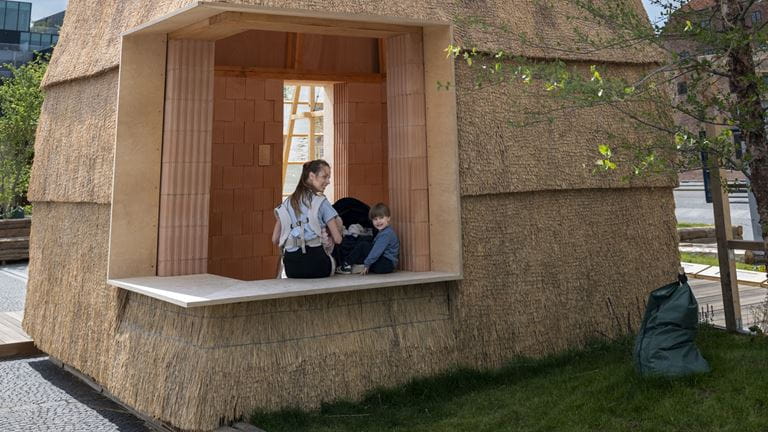
Cities and construction account for a significant proportion of greenhouse gas emissions, resource consumption and waste. A green transition in construction is thus a vital necessity.
The climate changes are already affecting the built environment and threatening our quality of life, and over the coming years, a radical change will be needed in the ways that we build and plan. We must prepare our cities for climate changes of which we can only see the outlines today.
New building practices will help us to establish more sustainable techniques and support our quality of life. This will require digitisation, the use of the latest technology, and collaboration and innovation between the actors of the building sector, the state and local authorities, civil society and citizens. The common challenge is to develop building practices that will minimise the climate footprint and reduce resource consumption. These must combine rapid adjustment with high architectural quality and enable citizens to make sustainable choices in their everyday lives.
Focus area: The Green Transition of Construction
In recent years, many activities have been carried out with the aim of creating more sustainable construction, with pilot projects being developed and new ideas created. We must bring these into play quickly and efficiently, with the goal of contributing to new practices in construction that will transform the industry.
Construction practice is about new materials, technologies and processes, but also about developing ‘circular’ solutions in which building components and materials can be reused and recycled to a much greater extent than at present.
The transition will therefore require the use of the latest technology in combination with knowledge and methods drawn from building crafts and traditions. Through the high quality of the solutions, we can create a new architecture that will be attractive enough to allow green solutions to be scaled.
Realdania will focus on:
- Contributing to exemplary and experimental construction and communicating solutions to the construction industry
- Supporting industry and research partnerships aimed at developing knowledge and tools and testing new, sustainable solutions for the market and the public authorities
- Implementing mission-related investments (MRIs) capable of supporting the necessary scaling of circular construction and other solutions with a lower carbon footprint and reduced resource consumption
Focus area: Resilient Cities
In recent years, many people in Denmark have experienced damage and destruction to buildings and even whole towns as a result of the extreme weather events caused by climate change. Cities therefore face the major task of both adapting to a future with a more extreme climate, while at the same time developing in a way that will not further accelerate climate change.
This calls for the holistic development of cities, in which we as far as possible maintain and reuse the existing physical structures in urban areas. We must avoid building where the risk of climate-related incidents is greatest, and we must ensure that climate adaptation supports the creation of urban environments that provide a good framework for everyday life.
Realdania will focus on:
- Contributing to concrete exemplary building projects which demonstrate how buildings, facilities and urban spaces can be planned and developed so that cities become more resilient to climate change
- Supporting the development of knowledge, tools and communication about resilient cities, in relation to both climate adaptation and the role of urban areas in preventing climate challenges
Focus area: Sustainable Living
The green transition in the built environment will require not only profound changes in the construction industry, but also broader behavioural changes in society. Many citizens would like to live more sustainable everyday lives, but lack the knowledge about how to do so.
There is thus a need to create broad engagement in society and make it easier for people to change their behaviour and make sustainable choices in their everyday lives. This will require both new knowledge and the general communication of advice on, for example, choices of materials, maintenance, energy renovation and other measures that can help to support more sustainable everyday practices.
Realdania will focus on:
- Contributing to exemplary building projects that support sustainable behaviour
- Promoting the communication of good examples of the construction, renovation and maintenance of homes with a low carbon footprint
- Contributing to the development of new knowledge and services among architects, artisans and builders’ suppliers which will support the green transition among Danes in relation to their homes